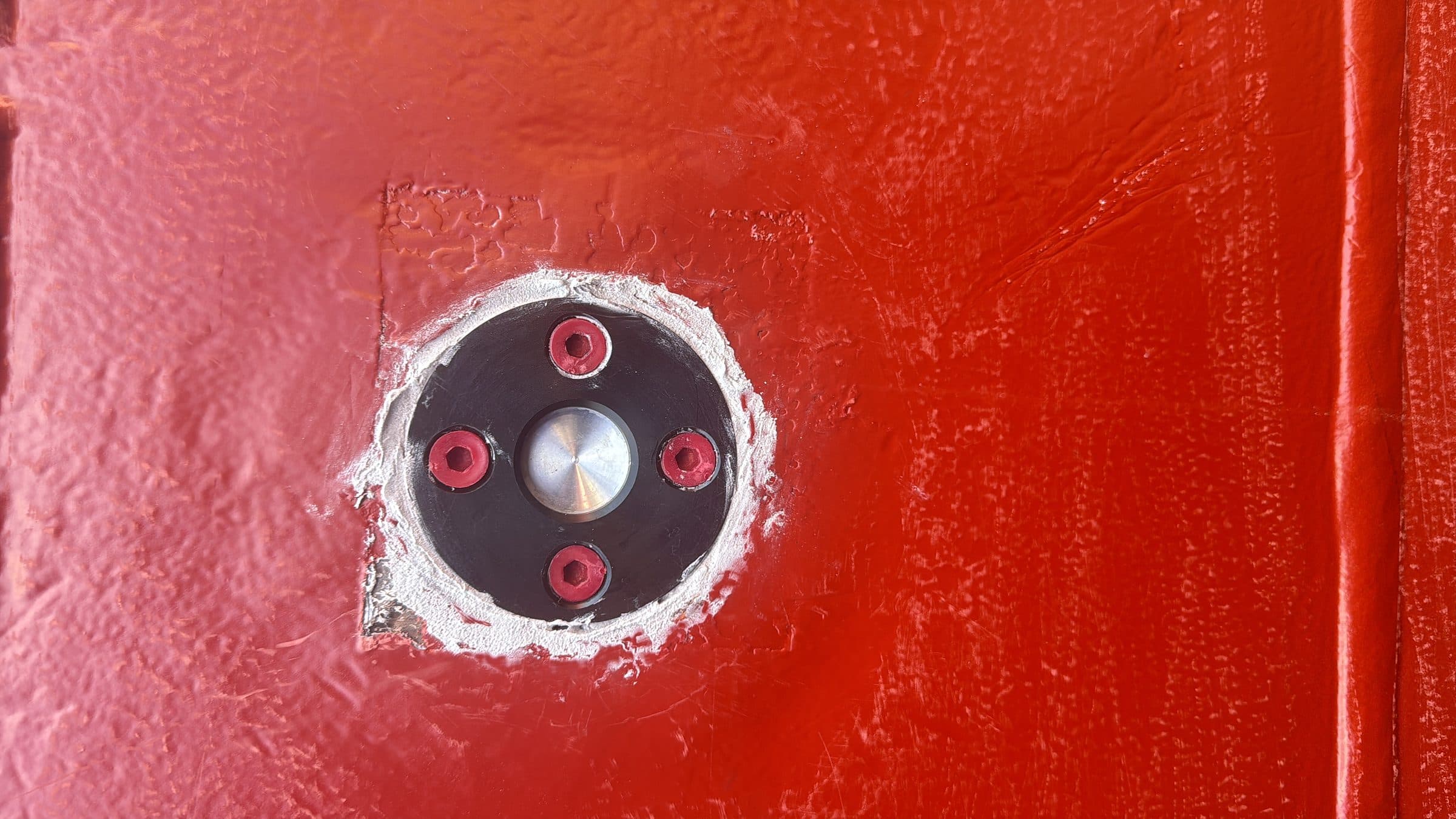
A hull-mounted ICCP reference electrode — impressed current cathodic protection in service.
Powered protection for structures where sacrificial anodes can't carry the current demand — large hulls, FPSOs, long pipelines and permanent port infrastructure. Designed, manufactured and commissioned as one engineering solution, not assembled from a parts list.
A structure too large, too critical, or too long-lived for sacrificial anodes alone to protect economically — a hull that would need an impractical anode load, a pipeline running further than a maintenance dive can reach, or permanent infrastructure with a fifty-year design life ahead of it.
The right choice depends on current demand, structure size, design life and access for maintenance — not a fixed rule. Both are engineered to the same protection criterion: −850 mV or more negative against Ag/AgCl.
| Standard | Applies to |
|---|---|
| DNV-RP-B401 | Cathodic protection design |
| DNV-RP-F103 | Cathodic protection of submarine pipelines |
| ISO 15589-2 | CP of pipeline systems (petroleum, petrochemical, natural gas) |
| NORSOK M-503 | Cathodic protection design |
| NACE SP0387 | Anode inspection — trapezoid galvanic anodes |
| NACE SP0492 | Anode inspection — bracelet galvanic anodes |
Anodes used in hybrid ICCP/SACP designs are DNV Type Approved (A-Guard aluminium alloy) — this approval applies regardless of which facility in our regional manufacturing network cast the anode.
A hull-mounted ICCP reference electrode — impressed current cathodic protection in service.
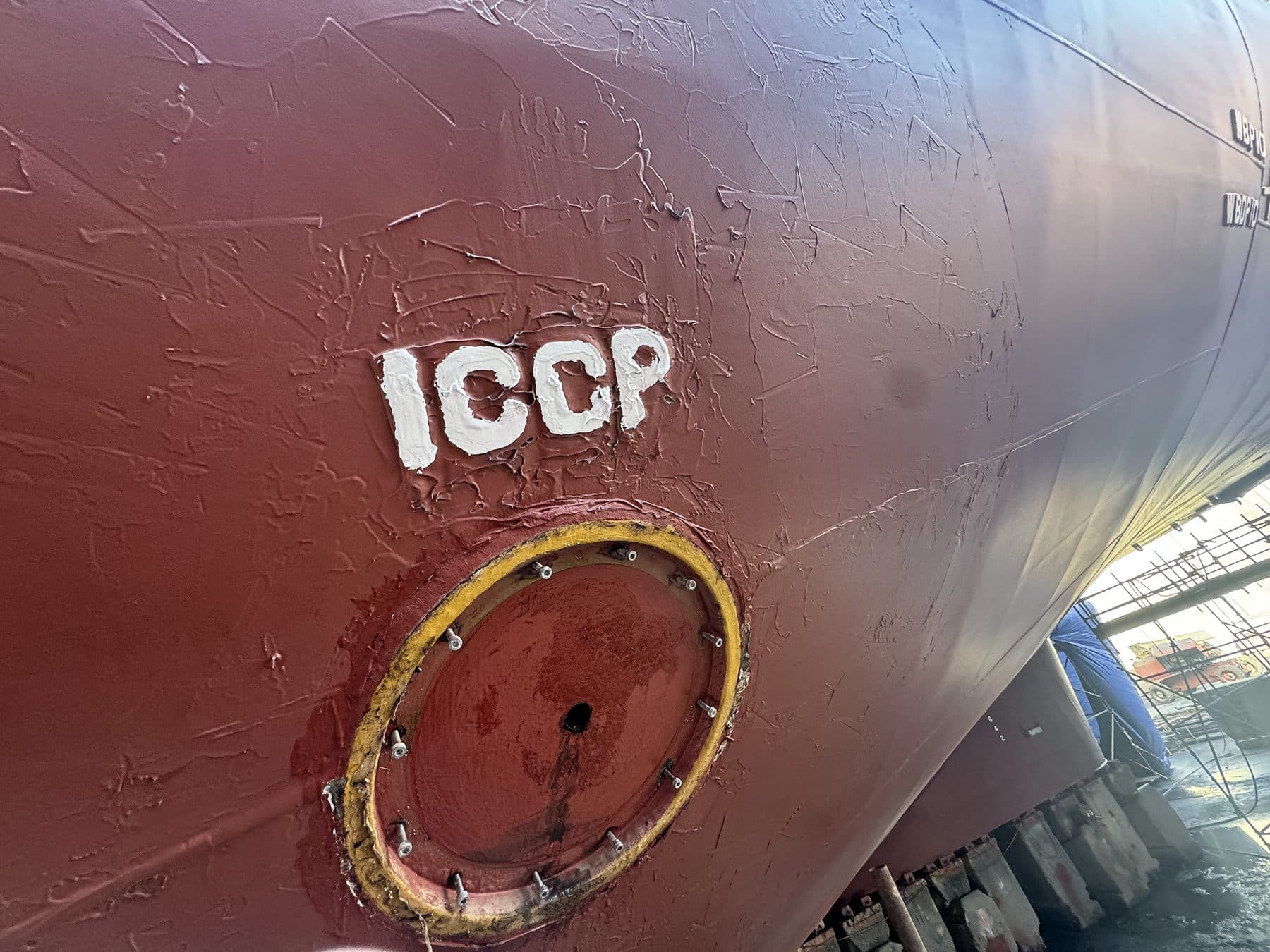
Most competitors design or manufacture. For impressed current cathodic protection, we do both, plus installation, commissioning and lifecycle monitoring — coordinated as one engagement.
Current demand calculation, anode/electrode placement, drawings.
Anodes cast through our regional manufacturing network; equipment engineered in.
In-house diving and marine installation teams, or yard-coordinated fitting.
System energised, potentials verified against the −850 mV criterion.
Scheduled monitoring, inspection, and life extension as the system ages.
CCME-MCPS was engaged on behalf of the vessel owner after NOVA 1's impressed current cathodic protection (ICCP) system was inspected on arrival at dry dock and found non-functional — the hull was unprotected at the start of the docking, with an urgent requirement identified.
Three options were assessed: replacing the ICCP power supply unit alone (a six-week lead time, and one that wouldn't have resolved inadequate current output and anode placement even once fixed), a hybrid ICCP/SACP system as the ideal long-term solution, or a full sacrificial anode (SACP) system as an immediate fix. The client selected the full SACP system to align with the drydock schedule, with an ICCP retrofit planned for a future docking.
Vessel data was reviewed in consultation with our UK engineering partner, MCPS, and a full distribution plan prepared covering the hull, rudder, skeg, bilge keels, thruster and sea chests — designed and validated against international standards for immediate protection.
At the time, our regional GCC foundry was mobilised for urgent casting. DNV Type Approved aluminium anodes were produced within 24 hours, QA/QC completed, and the anodes transported directly to the dry dock. Installation — around 250 weld-on sacrificial anodes — was carried out within the vessel's existing scheduled slot, guided and supervised by our corrosion engineers. (CCME-MCPS manufacturing today is delivered through our controlled UAE and Gulf capability and partner foundries.)
The anodes and reference electrodes are typically designed for 15–25 years depending on application; the transformer rectifier and cabling usually need replacement or refurbishment within 10–15 years. Design life is specified per project against DNV-RP-B401.
Some retrofit work — reference electrode replacement, rectifier upgrades — can be done afloat. Anode replacement below the waterline generally requires dry-docking or diver installation, depending on anode type and hull access.
The structure loses protection immediately — ICCP provides no protection without power, unlike sacrificial anodes. This is why monitoring and scheduled inspection matter, and why hybrid ICCP/SACP designs are sometimes specified for critical structures as a fallback.
Yes — impressed current systems for submarine and buried pipelines are designed to DNV-RP-F103 and ISO 15589-2, with shore or platform-mounted transformer rectifiers depending on route and access.
Structured engineering enquiry — get a scoped preliminary brief, not a generic quote request.
Start an ICCP enquiry